In short
Ginger garlic paste is usually added after the onions have softened and before the tomatoes, so it has time to cook through. The quantity depends on the dish — follow your recipe and the product label.
Ginger garlic paste does one job in Indian cooking, and it does it early: it builds the aromatic base everything else sits on. Get the timing right and the dish tastes finished. Get it wrong and there is a sharp, slightly metallic edge that no amount of simmering afterwards will hide.
Where it goes in the pan
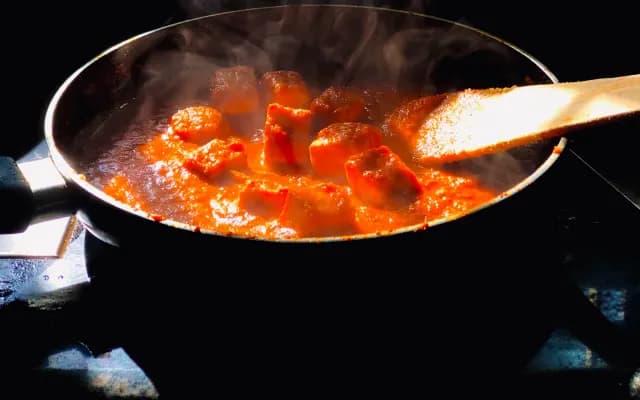
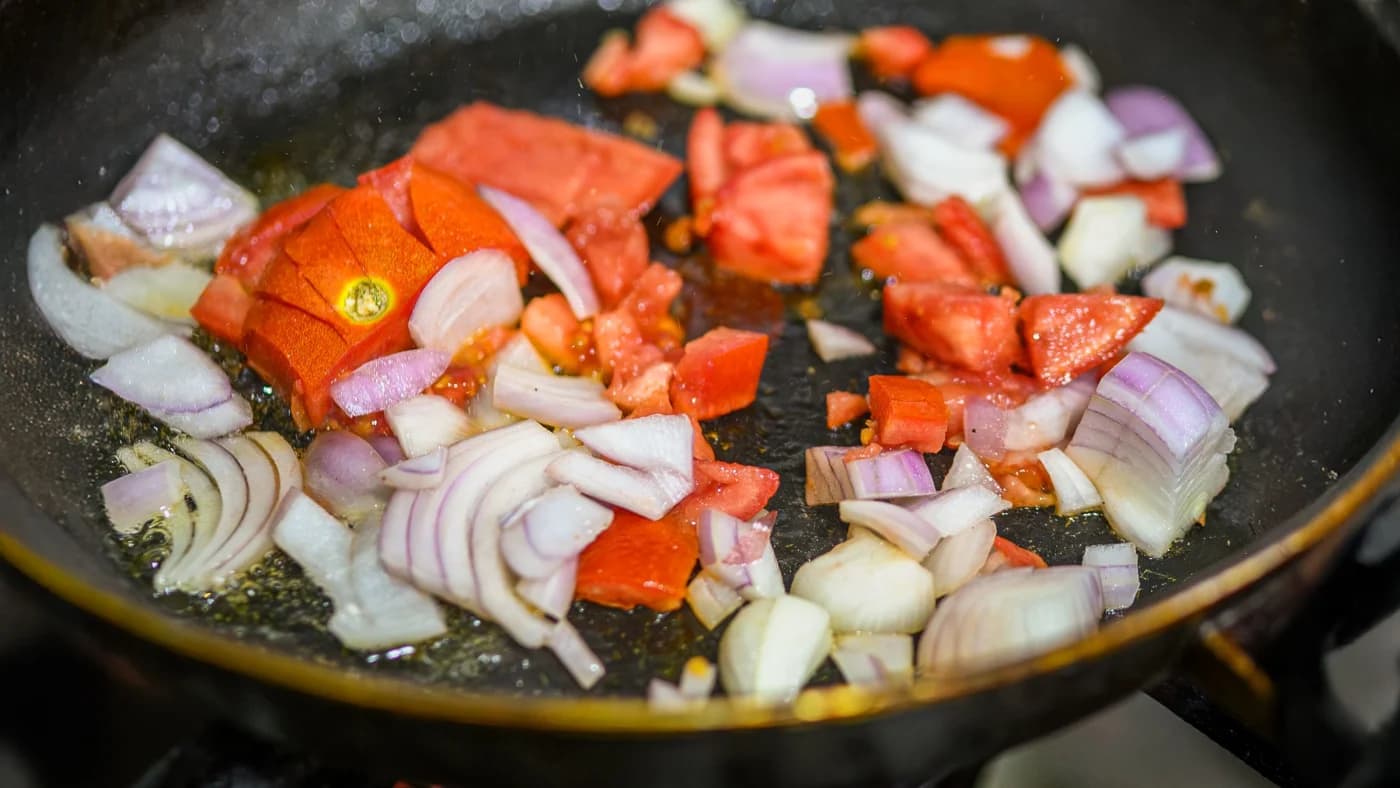
The usual order is oil, whole spices, onions, then ginger garlic paste, then tomatoes. That position is not arbitrary. By the time the onions have softened and turned pale gold, the pan is hot enough and dry enough for the paste to actually cook rather than steam. Once tomatoes go in, the pan is wet — and anything added after that point will simmer, not fry.
So the paste needs its own moment, between those two stages.
How long it needs
Usually a minute or two on medium heat. You are looking for three signals, in this order:
- The raw, bright smell turns rounder and nuttier.
- The paste stops clinging to itself and starts moving freely in the oil.
- A thin film of oil separates at the edges.
That last one is the reliable tell. When oil pulls away from the mixture, the water has cooked off and the paste is done.
How much to use
It depends on the dish and how forward you want the aromatics. A dal takes less than a rich gravy; a marinade takes more than either. Start with what your recipe says, taste the finished dish, and adjust next time rather than mid-cook — once it is in, it cannot come out.
Follow the guidance on the product label for the pack you are using.
Four mistakes worth avoiding
Adding it to a cold pan
The paste sits in cooling oil, releases its water, and poaches. It needs heat already there.
Adding it after the tomatoes
The most common one. In a wet pan the paste never fries, so the raw note survives all the way to the plate.
Cooking it too hard
Garlic burns quickly and bitter. If the pan is smoking, pull it off the heat for a few seconds before the paste goes in.
Rushing it
A minute feels long when you are standing over a pan. It is not. Wait for the oil to separate.
Dishes it suits
Dals finished with a tempering, homestyle curries and gravies, marinades for paneer or vegetables, and quick stir-fries where there is no time for aromatics to mellow later. In each case the principle is the same: give it hot oil and a minute to itself.
- ginger garlic paste
- kitchen basics
Seelbatta · Kitchen team
Last reviewed 15 Sept 2026
Share