In short
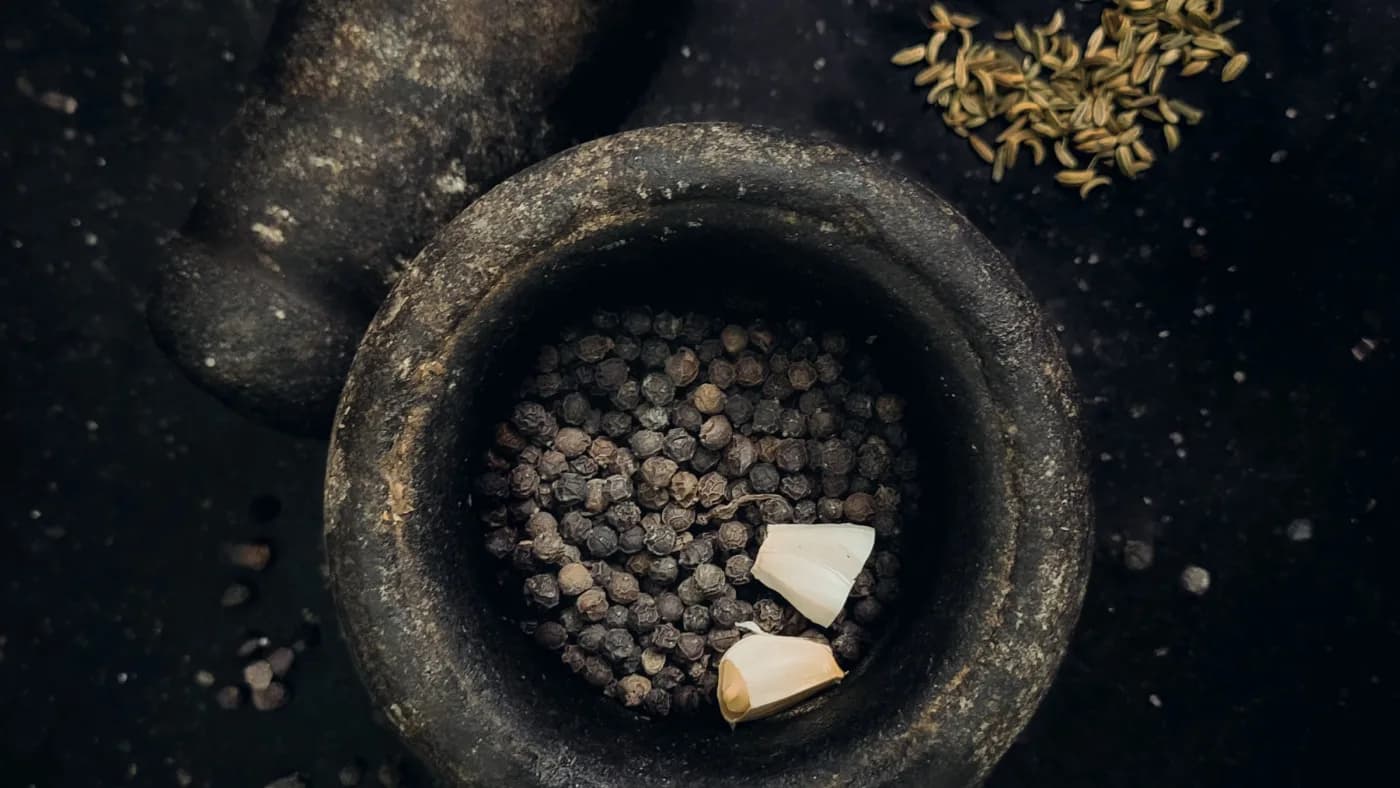
A silbatta is a traditional Indian grinding set: a flat stone slab (sil) and a cylindrical grinding stone (batta) used to crush spices, herbs and aromatics by hand.
A silbatta is two pieces of stone. The sil is a flat, slightly rough slab that sits on the floor or a low platform. The batta is a smaller cylindrical or loaf-shaped stone held in both hands and worked across it. Together they were, for a very long time, how Indian kitchens turned whole ingredients into pastes and masalas.
How it was used
The cook knelt or crouched at the slab and pushed the batta forward and back with their body weight behind it, not just their arms. Ingredients went on in small batches with a little water. Spices, soaked chillies, ginger, garlic, coconut, herbs — all of it was crushed rather than cut.
A new stone was dressed before first use: tapped with a chisel to roughen the surface so it would grip. A well-used silbatta was re-dressed every few years as the surface wore smooth.
Why crushing is different from cutting
This is the part worth understanding, because it is the whole reason anyone still talks about stone.
A blade slices cleanly through plant cells. A stone bruises and tears them, rupturing many more cell walls and releasing more of what is inside — the aromatic oils that carry most of the flavour. Crushing also works slowly and generates little heat, where a fast blade warms what it cuts and drives off some of the volatiles.
The practical result is a paste with a different texture and a different aroma profile. Not automatically better for every purpose — but genuinely different, and that difference is why the method persisted long after machines existed.
Silbatta, sil-batta, or something else
The name varies by region. You will hear sil-batta, sil-lodha, pata-varvanta in Maharashtra, ammikallu in parts of the south. These are not all identical tools — shapes and sizes differ — but the principle of stone crushing stone is shared across them.
Why most kitchens stopped
Honestly: it is hard work. A silbatta asks for real physical effort, several minutes per batch, and a cleaning routine that involves scrubbing stone rather than rinsing a jar. Mixers arrived and did in thirty seconds what took fifteen minutes. Most households made that trade, and it is not difficult to see why.
What was lost was not just texture. It was a step in the day that was slow and physical and happened in company — which is a large part of why people remember it fondly.
Where the name Seelbatta comes from
Ours is a nod to this tool and what it represents: preparation done with attention. It is a reference to the method's heritage, not a claim about how our products are made. For how Seelbatta Ginger Garlic Paste is actually prepared, see Our Process — we would rather be plain about that than let a name imply something it should not.
- silbatta
- heritage
- Indian kitchen
Seelbatta · Kitchen team
Last reviewed 30 Sept 2026
Share